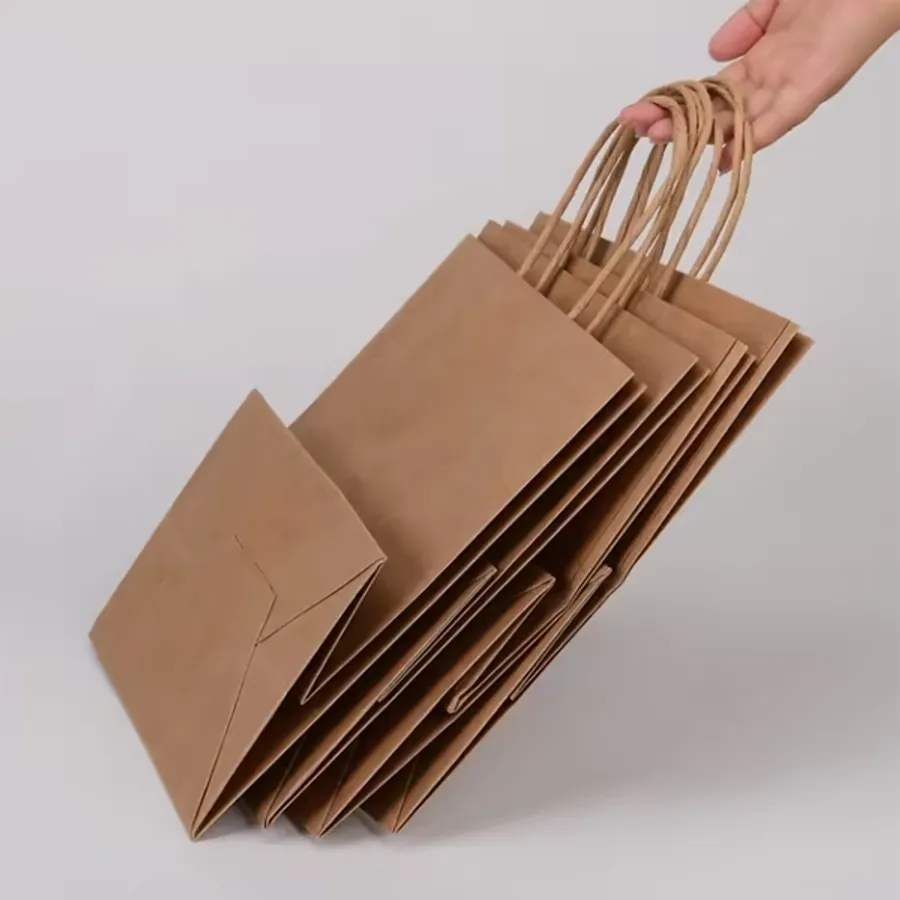
Paper bag guide
Paper Bag Weight: GSM and Basis Weight
What gsm and lb basis weight mean for a paper bag, with a conversion table
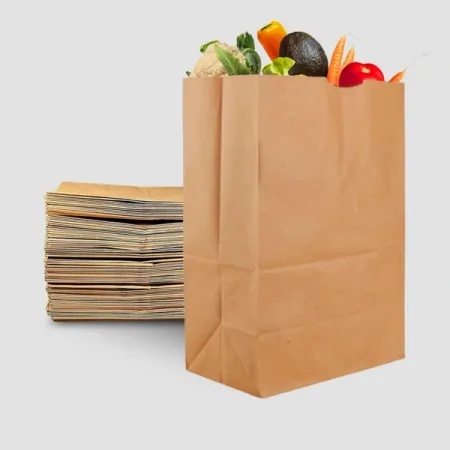
What does gsm mean on a paper bag?
Gsm stands for grams per square meter. Take one square meter of the paper, weigh it, and that number in grams is its gsm.
It is the simplest way to compare papers. A 120 gsm sheet is heavier, and usually stiffer, than an 80 gsm sheet of the same kind.
Gsm describes one layer of paper, not the finished bag. A folded top, a card base or a second layer can make a bag feel sturdier than its gsm suggests.
Most paper mills and bag makers outside the US quote in gsm. Many US buyers think in pounds, which is where basis weight comes in.
What is basis weight in pounds?
Basis weight is the US way of describing paper weight. It is the weight in pounds of one ream of the paper, cut to that paper's standard sheet size.
For kraft bag paper, the ream is 500 sheets of 24 × 36 in. That adds up to 3,000 square feet of paper.
So a 50 lb kraft paper means 3,000 square feet of it weighs about 50 lb. The number describes the paper, not how much a bag made from it can carry.
US grocery suppliers often say "50 lb kraft" or "60# kraft." The # sign is just shorthand for pounds.
How do you convert gsm to lb basis weight?
For kraft paper on the 3,000 square foot ream, the conversion is simple. Multiply gsm by 0.615 to get pounds.
Going the other way, multiply pounds by about 1.63 to get gsm.
Keep the 0.615 factor for kraft bag paper only. Other papers use other reams, which the next sections explain.
Three worked examples help. A 70 gsm lunch bag paper is 70 × 0.615, about 43 lb.
A 120 gsm retail bag paper is about 74 lb. A 50 lb grocery paper is 50 × 1.63, about 81 gsm.
Round to the nearest pound or gram. Paper weights vary a little from batch to batch, so the last decimal place never matters on a bag.
Gsm to lb conversion table for kraft paper
This table uses the 3,000 square foot kraft ream. Values are rounded and meant as guidance for comparing quotes.
| gsm | About (lb basis) | Where you often see it |
|---|---|---|
| 40 | 25 lb | Very light wraps and sleeves |
| 50 | 31 lb | Fry and sandwich sleeves |
| 60 | 37 lb | Cookie, pastry and merchandise bags |
| 70 | 43 lb | Lunch and small SOS bags |
| 80 | 49 lb | Larger SOS and bakery bags |
| 90 | 55 lb | Lighter grocery and takeout bags |
| 100 | 62 lb | Grocery and carryout bags |
| 115 | 71 lb | Heavier grocery sacks |
| 120 | 74 lb | Retail bags with twisted handles |
| 130 | 80 lb | Retail and handle bags |
| 150 | 92 lb | Sturdier retail and flat handle bags |
| 157 | 97 lb | Coated gift bags |
| 170 | 105 lb | Coated rope handle bags |
| 190 | 117 lb | Eurotote bags |
| 210 | 129 lb | Luxury bags |
Why 100 lb text paper is not 100 lb kraft
Basis weight depends on the ream size, and different papers use different reams. That trips up a lot of buyers comparing quotes.
Coated papers are often quoted as text or cover weight. Text weight uses a 25 × 38 in sheet, so 100 lb text is about 148 gsm. Cover weight uses a 20 × 26 in sheet, so 80 lb cover is about 216 gsm.
That is why gsm is the safer number for comparing. It means the same thing for every kind of paper.
If one quote says 100 lb and another says 150 gsm, ask which ream the pounds refer to. We list gsm on our quotes and can add the lb figure on request.
Board for boxes is measured in yet another way, often by thickness in points. It does not apply to paper bags, so you can ignore it here.
Which paper weight suits which bag?
These ranges are what bags of each type commonly use. Your quote suggests a weight based on what you pack, so treat them as a starting point.
Food sleeves sit low because they wrap a single item. Bags that stand open and carry several items need the middle and upper ranges.
- Fry, sandwich and pizza sleeves: about 40–60 gsm (25–37 lb). Light paper wraps closely and folds without cracking.
- Cookie, pastry and flat merchandise bags: about 50–70 gsm (31–43 lb).
- Lunch and SOS bags: about 70–80 gsm (43–49 lb). Firm enough to stand open, light enough to fold.
- Grocery sacks and takeout bags: about 90–115 gsm (55–71 lb).
- Retail bags with twisted or flat handles: about 120–150 gsm (74–92 lb).
- Eurotote, rope handle and luxury bags: about 157–210 gsm (97–129 lb), usually coated.
Does heavier paper always make a stronger bag?
Not on its own. Weight helps, but the build of the bag matters just as much.
A square bottom spreads the load better than a flat bag. A folded, reinforced top holds handles better than a single edge. Good gluing on the bottom panel matters more than ten extra gsm.
Packing matters too. Pack heavy, flat items low and soft items on top. A lighter bag packed that way can beat a heavier one packed badly.
Moisture is the other big factor. Damp paper of any weight goes soft, so cold or wet items need wrapping before they go in.
Because all of these play a part, our quotes never state a carrying limit in pounds. Describe the contents instead, and the weight we suggest is based on them. Grocers carrying cans and bottles usually choose grocery bags with handles in heavier kraft.
How paper weight changes print and feel
Heavier paper is usually smoother and stiffer. Print sits flatter on it, and the bag face stays flat on a counter instead of buckling.
Light paper is soft and flexible. That suits sleeves and food bags that wrap around an item, but large print panels can wrinkle.
Weight also changes how cartons stack. Heavier bags take more room and weigh more per thousand, which matters if storage space is tight.
Customers also judge weight with their hands. A 190 gsm coated bag feels expensive before anyone reads the logo. That is why fashion and jewelry brands choose it.
Lamination, foil and embossing need a heavier coated base to look right. See how weight and finish work together on our luxury paper bags page.
Can you check a paper's gsm yourself?
Yes, with a kitchen scale and a ruler. It is a handy way to compare a sample bag with the weight on a quote.
Cut a square of 20 × 20 cm from a flat panel of the bag, away from glue and folds. That square is 0.04 square meters.
Weigh it in grams and multiply by 25. A square weighing 3 g works out at about 75 gsm, the weight of a typical lunch bag.
Kitchen scales are rarely precise below one gram. For a fairer number, cut four squares, weigh them together and divide the result by four before you multiply.
Expect a few gsm of difference from the stated weight. Printing, coating and humidity all nudge the number. You can try it on a brown paper lunch bag to get a feel for 70–80 gsm.
How to choose a paper weight for your order
You do not need to know the right number before you ask. These steps get you to a sensible weight quickly, and the quote confirms it. Start with a paper bag quote request that lists your contents.
- Write down what goes in the bag and roughly how heavy a full bag is.
- Note how far the bag travels: across a counter, to a car or down the street.
- Pick the bag type, then find its weight range in the list above.
- Go to the upper end of the range for heavy, sharp or boxed contents.
- Go to the lower end for light, soft items and food sleeves.
- Request two paper weights side by side to weigh feel against price.