Grocery Bags and Carryout Sacks in Brown Kraft
Six grocery and carryout styles for checkouts, delis, pharmacies and lunch counters, from the full-size 1/6 barrel sack to the small #6 lunch bag.
Most are heavier brown kraft with a square bottom that stands open while you pack. Order them plain or printed with your store name.
- 6 bag styles
- Free design proof
- Free tracked delivery
No bags match that filter. Ask us for it by name and we will quote it.
| Bag | Best for | Handles | Typical size | Open |
|---|---|---|---|---|
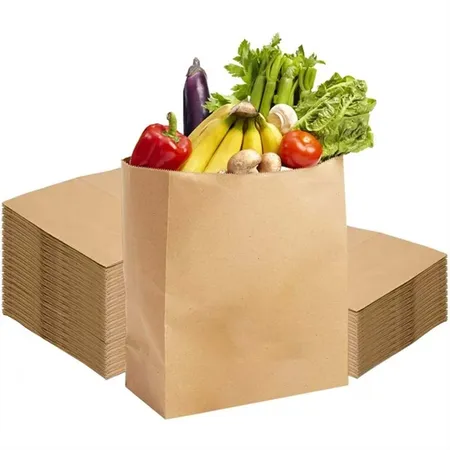
| Paper Grocery Bags | Supermarkets, delis and farm stands | No handles | Often 12 × 7 × 17 in | |
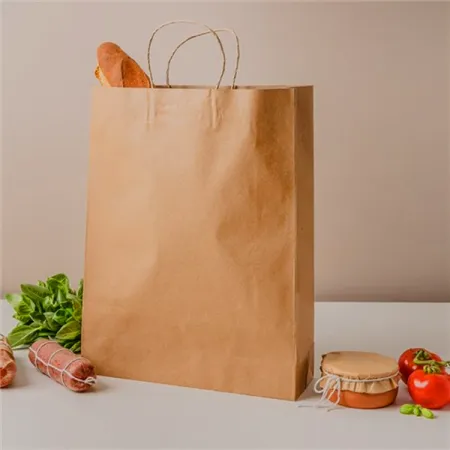
| Grocery Bags with Handles | Grocery and carryout orders | Twisted paper handles | Often 12 × 7 × 17 in | |
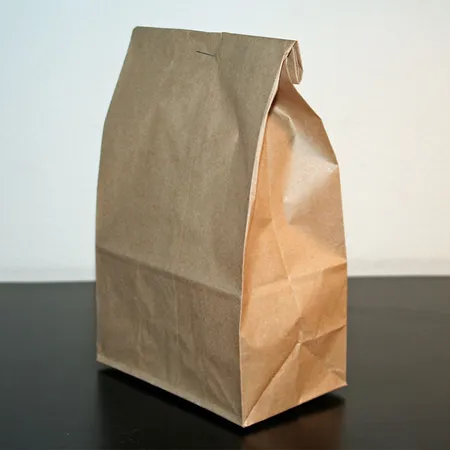
| SOS Paper Bags | Lunches, pharmacy, snacks and carryout | No handles | Often #6, #8, #12 or #20 | |
| Brown Paper Bags | General packing at the counter | With or without handles | Many sizes, from #2 up | |
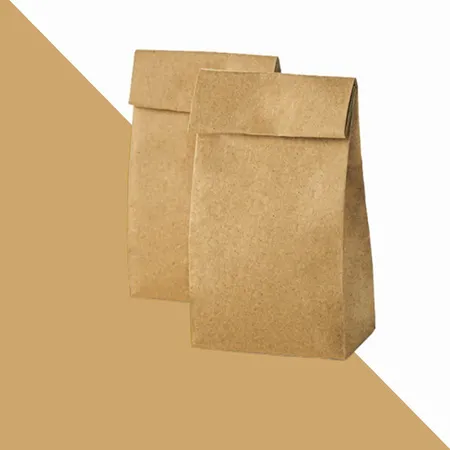
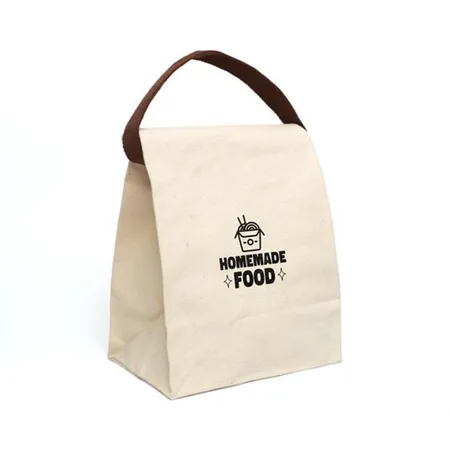 Paper Lunch Bags | Packed lunches, meal kits and catering | No handle, or a strap handle | Often #6 or #8 | |
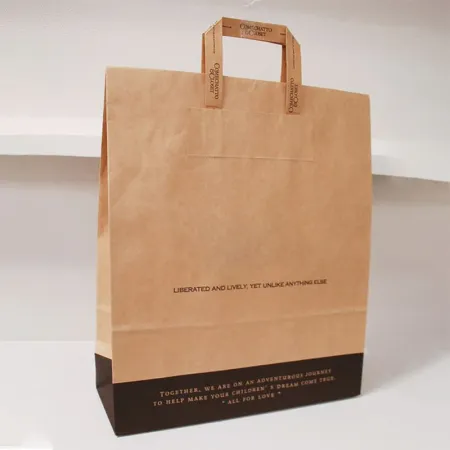 Flat Handle Paper Bags | Restaurant carryout and grocery | Flat paper handles glued inside | Wide sizes for food containers |
Paper Grocery BagsSupermarkets, delis and farm standsFrom $0.30 per unitGrocery Bags with HandlesGrocery and carryout ordersFrom $0.30 per unitSOS Paper BagsLunches, pharmacy, snacks and carryoutFrom $0.30 per unitBrown Paper BagsGeneral packing at the counterFrom $0.30 per unitPaper Lunch BagsPacked lunches, meal kits and cateringFrom $0.30 per unitFlat Handle Paper BagsRestaurant carryout and groceryFrom $0.30 per unitWhat are grocery bags, and who orders them?
A grocery bag is a tall, square-bottom kraft sack that stands up on its own while a cashier fills it. Cans go in first, bread and eggs go on top, and the top folds over or stays open.
Supermarkets, co-ops, delis, butchers, liquor stores and farm stands order them by the carton. So do pharmacies and hardware stores, in smaller sizes.
What they want is simple. The sack should open first time, stand up while it fills and hold together at the seams. Most of the advice on this page comes back to those three things.
The classic full-size sack is the backbone of the range. See paper grocery bags without handles for that style in detail. It includes the 12 × 7 × 17 in size most checkouts use.
The six grocery and carryout styles compared
Each style below solves a different counter problem. Some stores use only one; a busy grocer often keeps three.
The sizes are where most buyers begin. If your containers or products do not fit them, we make the bag to your measurements instead.
If you are new to paper, a sensible first order is one full-size sack plus one SOS size. Add handles or lunch bags once you see how customers use them.
| Bag | Best for | Handles | Typical size |
|---|---|---|---|
| Paper Grocery Bags | Supermarkets, delis and farm stands | None | 12 × 7 × 17 in (1/6 barrel) |
| Grocery Bags with Handles | Grocery and carryout orders | Twisted paper | 12 × 7 × 17 in |
| SOS Paper Bags | Lunches, pharmacy, snacks and carryout | None | #6, #8, #12 or #20 |
| Brown Paper Bags | General packing at the counter | With or without | Many sizes, from #2 up |
| Paper Lunch Bags | Packed lunches, meal kits and catering | None, or a strap handle | #6 or #8 |
| Flat Handle Paper Bags | Restaurant carryout and grocery | Flat paper, glued inside | Wide sizes for food containers |
What does 1/6 barrel mean on a grocery bag?
It is an old trade name for the standard full-size grocery sack. In the US it usually means a bag of about 12 × 7 × 17 in. That is 30.5 × 17.8 × 43.2 cm.
That size holds a full checkout load and fits the bag racks at most registers. If your racks or carts are a different size, measure them before you order.
Smaller stores often pair the full sack with a shorter bag for quick trips. A two-size setup stops cashiers from putting one lemon in a giant sack.
Shoppers on foot or on transit tend to prefer a sack they can carry by hand. For that, look at grocery bags with twisted paper handles in the same 12 × 7 × 17 in footprint.
Which SOS bag number do you need?
SOS stands for self-opening sack. A flick of the wrist pops the square bottom open, which is why lunch counters and pharmacies like them.
Because they ship flat and open in a second, SOS bags save counter space. A bundle of a few hundred fits under most registers.
The number roughly tracks the size. Here are the four we quote most often, as guidance.
Pharmacies tend to use #4 to #8, delis #8 to #12. Our self-opening SOS paper bags page lists more numbers, from #2 up to #20.
- #6, about 6 × 3.6 × 11 in: a sandwich, chips and a drink, or a small prescription.
- #8, about 6.1 × 4.1 × 12.4 in: a bigger deli order or two lunches.
- #12, about 7 × 4.5 × 13.75 in: takeout sides, bakery items or a stack of boxes.
- #20, about 8.25 × 5.3 × 16.1 in: larger carryout orders and bulky snacks.
Handles or no handles at the checkout?
Handle-free sacks are cheaper and pack faster, because there is nothing to tuck out of the way. Drive-up stores and customers loading a car rarely miss the handle.
Handles matter when people walk. A flat paper handle spreads the load across the palm, so it feels better on wide, heavy carryout orders.
Twisted handles are lighter and look neater on grocery bags that double as a branded tote. Both handle types are glued inside the top, so the outside stays clean for printing.
A good test is to watch your doorway for a day. If most customers walk to a car, plain sacks are fine. If most walk home or to a bus stop, budget for handles.
Restaurants that send out several stacked containers often pick flat handle paper bags with wide bottoms for that reason.
How heavy should grocery bag paper be?
Grocery sacks use heavier kraft than most bags on this site. As a guide, full-size sacks often sit around 90–115 gsm, which is roughly 55–71 lb basis weight.
Lunch and SOS bags are lighter, often 70–80 gsm or about 43–49 lb. They carry less, and lighter paper folds more easily at a lunch counter.
These numbers are guidance, not a load rating. How much a bag carries also depends on the bottom, the glue and how it is packed.
Quotes list paper in gsm, lb or both. If the two numbers confuse you, read how gsm and lb basis compare before you choose.
Lunch bags for schools, offices and catering
Lunch bags are small square-bottom sacks, usually #6 or #8. Schools, office caterers, camps and meal kit companies order them in large numbers.
A strap handle is an option when people carry their lunch any distance. Without a handle, the top simply folds over twice.
Catering teams often print a menu line or a name panel on the front. Staff write the order name in marker, and the right lunch reaches the right desk.
Meal kit companies use the same bags for portioned dry goods and recipe cards. A #8 holds a surprising amount once the corners are filled.
Some school cafeterias order brown and white bags, one for each lunch line. Staff then sort them at a glance.
White kraft is popular here because names and allergy notes stand out. See the sizes and handle choices on our paper lunch bags for packed meals page.
Plain brown bags for every counter
Not every bag needs a job title. Hardware stores, bodegas and craft fairs keep plain brown bags for whatever comes across the counter.
These come flat or square-bottomed, with or without handles, and in sizes from a tiny #2 up to large sacks. Buy two or three sizes and you can bag almost anything.
A rubber stamp or a sticker on plain kraft works well for small shops that are not ready to print. When you are, the same bag takes a one-color logo.
Keep the smallest sizes near the register and the larger ones under the counter. Staff then grab the right bag without thinking.
For general counter use, start with our plain brown paper bags in many sizes.
Should you print your grocery bags?
A printed grocery sack is a walking sign for your store. Large, simple artwork works best: a logo, a store name and maybe a web address.
One color on brown kraft is the common choice. It reads from across a parking lot and keeps costs down.
Black, navy and deep red inks show well. Pale inks such as yellow or light blue fade into the brown.
Keep artwork on the flat front panel. Print on the bottom folds can crack.
Fine print and photos rarely work on heavy kraft, because the fibers soak up ink and soften the edges. Save those for white paper, and read our kraft vs white paper bags guide before you decide.
How do you pack a paper grocery bag so it carries well?
Good packing does more for a bag than an extra few gsm. Cashiers who pack well have fewer split bags and fewer unhappy customers.
Start with flat, heavy items standing on the bottom panel, such as cans, jars and boxed goods. They square the bag up and spread the weight across the base.
Fill the corners next, then put light and soft items on top. Bread, eggs, chips and herbs belong in the top third of the sack.
Keep wet or frozen items apart, or wrap them first. Damp kraft goes soft, and a soggy bottom panel is the usual reason a sack gives way.
Finally, do not fill past the top fold line. A sack you can roll over once is far easier to carry than one packed to the brim.
Grocery bag mistakes to avoid
Most complaints about grocery bags come from the wrong size or the wrong paper for the load. A few checks before ordering prevent them.
That last one is easy to fix with a little math. Our guide on estimating how many paper bags to order shows a worked example.
- Ordering lunch bag weight paper for full grocery loads.
- Picking a sack that does not fit your register racks.
- Choosing a pale ink that disappears on brown kraft.
- Forgetting a smaller size, so cashiers use full sacks for single items.
- Running out because nobody tracked how fast bags go.
How to order grocery and carryout bags
You can get a written quote for several styles at once. Here is the order of decisions that works best.
- Pick the styles your counters need, usually one full sack and one smaller size.
- Check each size against your racks, containers or largest product.
- Choose plain, or one color, two color or full color print.
- Send your logo and quantities with a quote request.
- Sign off the price, then check and approve your free proof.
- Your sacks are produced over 4–6 business days. The free, tracked shipment reaches you 2–3 business days after that.
Grocery and Carryout Bags: questions
12 answers. Type a word to narrow the list.
What size is a standard paper grocery bag?
The common full-size sack is about 12 × 7 × 17 in, often called 1/6 barrel. We also make shorter and wider sizes.
What does SOS mean on a paper bag?
Self-opening sack. The square bottom snaps open with one shake, so the bag stands up ready to fill.
Are grocery bags with handles more expensive?
Yes, a little. The handle adds material and a gluing step, and your quote shows the difference against a plain sack.
Can grocery sacks be printed on both sides?
Yes. Many stores print the logo on one face and a short message or web address on the other.
Which ink colors work best on brown grocery bags?
Dark inks such as black, navy or burgundy show clearly. White ink also works well on kraft for a bolder look.
Do you make grocery bags in white kraft?
Yes. Grocery and lunch bags can be made in white kraft as well as natural brown.
What is the difference between a lunch bag and an SOS bag?
A lunch bag is an SOS bag in a small size, usually #6 or #8. The name describes the use rather than the build.
Can lunch bags have a handle?
Yes. A strap handle can be added, or the bag can stay plain with a folded top.
Will a grocery bag fit a gallon of milk?
A standard 12 × 7 × 17 in sack takes a gallon jug upright. For heavy loads, tell us what you pack and we will suggest the paper weight.
Can I get grocery bags sized to my bag racks?
Yes. Send the rack width and depth and we will size the sack to fit.
Do flat handle bags suit grocery as well as restaurants?
Yes. Their wide bottom and flat handles work for both, especially with boxed or stacked items.
How many sizes of brown paper bags should a small shop stock?
Two or three sizes cover most counters, for example a #4, a #12 and one handle bag.
No question matches that word. Ask us directly and we will answer it.
Design Your Bag
Pick a bag from our photos, put your logo on it, choose the ink and send it. Our designers turn it into a free print-ready proof.
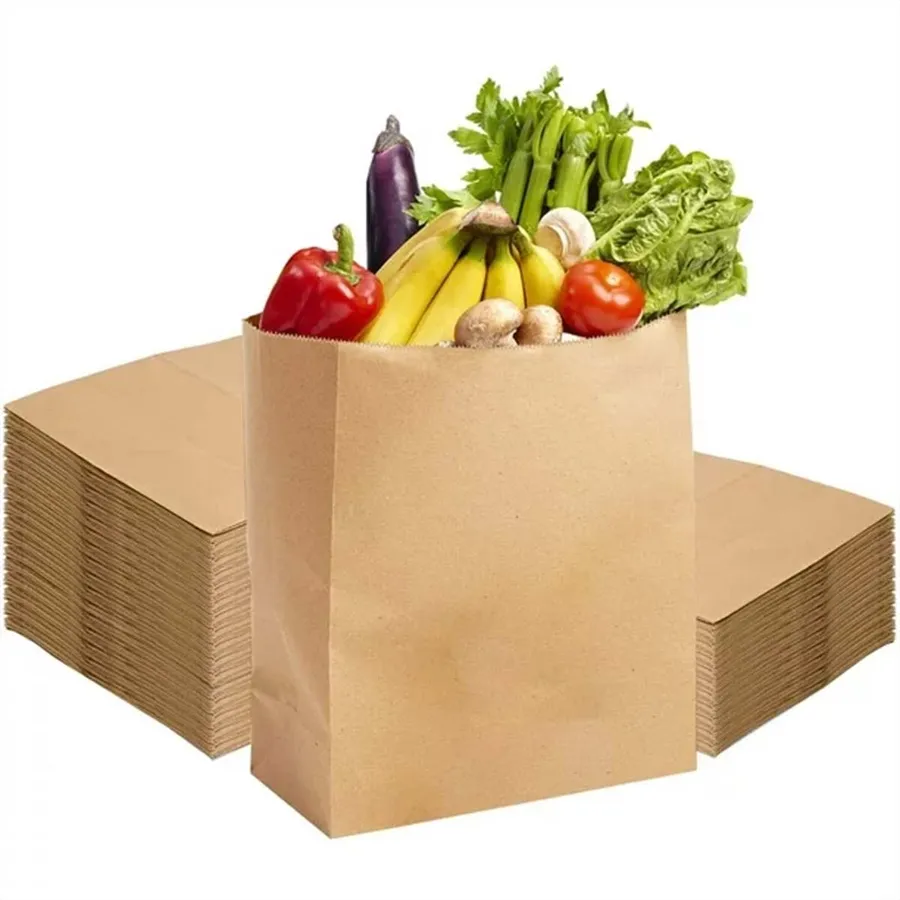
Upload your logo to see it on the bag
On the bag: Paper Grocery Bags
Bag
Send the full bag order details
Tell us the bag, the size, the handles and the print. We reply with a written quote, and a free design proof once your artwork is in.
| Price | From $0.30 per unit, confirmed on your quote |
|---|---|
| Proof | Free, before anything is printed |
| Production | 4–6 business days after proof approval |
| Delivery | Tracked, 2–3 business days, free to the US, UK, Canada and Australia |
| Problems | Misprints or damage reported within 10 days with photos: reprinted or refunded |
Rather talk it through? Call (503) 461-4788 or message us on WhatsApp.